
Research
LENGUAJE
Inhibitory Mechanisms in Negation
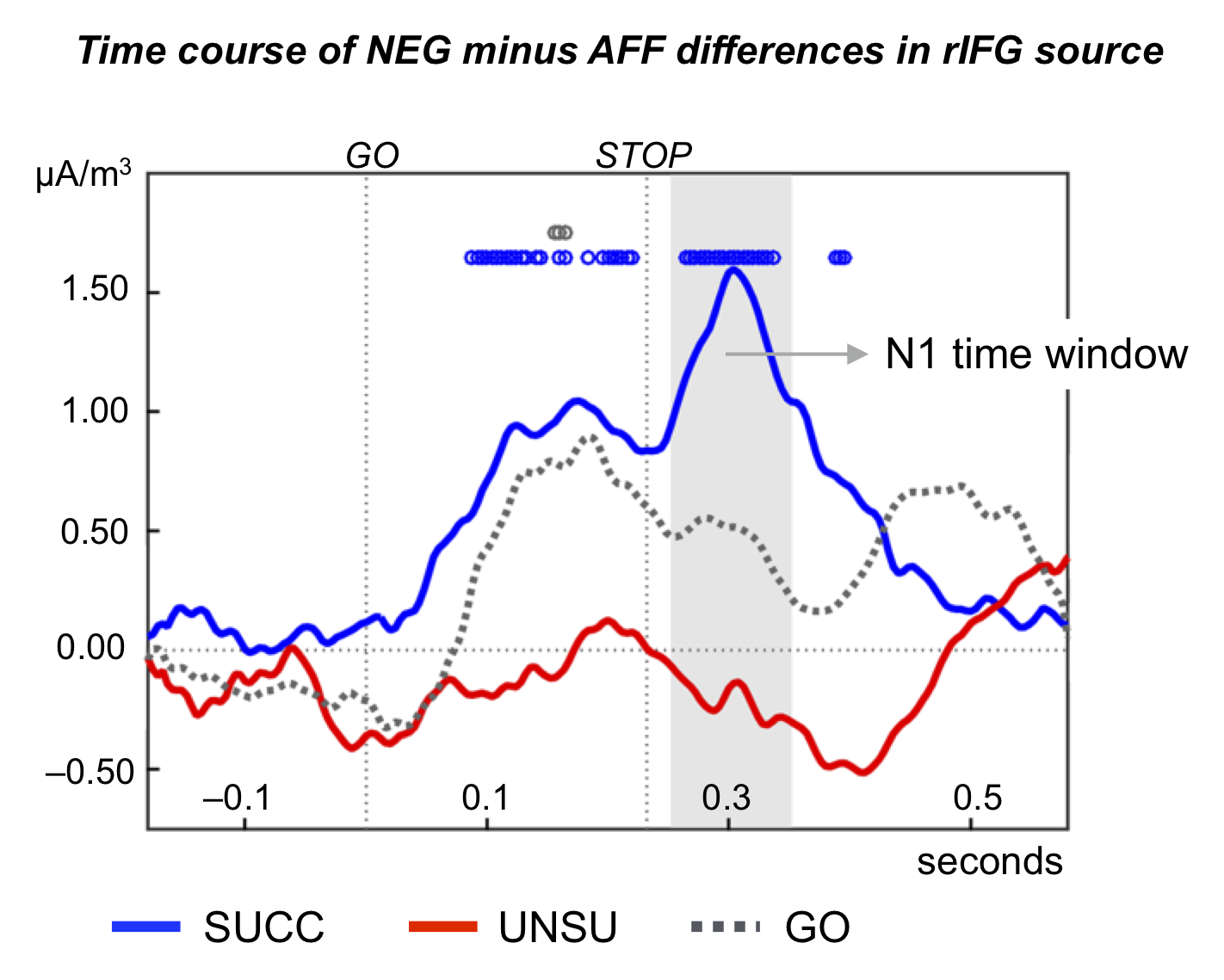
The primary communicative role of negation is to reject or otherwise correct specific information. But which brain mechanisms and cognitive processes allow words like “no” or prefixes such as “in-” to serve this purpose? Recent accounts suggest that linguistic negation relies on the reuse of domain-general mechanisms involved in conflict monitoring and inhibitory control. In our research group, we use electroencephalography and transcranial magnetic stimulation to test two central predictions of this hypothesis: 1) does negation involve the inhibition of the brain representations of the negated information?, 2) does this physiological effect depend on general-purpose brain mechanisms shared with other cognitive processes, such as action inhibition?
Recent publications:
Beltrán, D., Morera, Y., García-Marco, E., & Vega, M. D. (2019). Brain inhibitory mechanisms are involved in the processing of sentential negation, regardless of its content. Evidence from EEG theta and beta rhythms. Frontiers in psychology, 10, 1782.
Beltrán, D., Liu, B., & de Vega, M. (2021). Inhibitory mechanisms in the processing of negations: A neural reuse hypothesis. Journal of Psycholinguistic Research, 50(6), 1243-1260.
Liu, B., Gu, B., de Vega, M., Wang, H., & Beltrán, D. (2024). Existential negation modulates inhibitory control processes and impacts recognition memory. Evidence from ERP and source localisation data. Language, Cognition and Neuroscience, 39(2), 265-277.

Negation-Induced Forgetting
If understanding negated information, for example, “The robber’s hair was not curly,” involves suppressing or inhibiting that information to some extent, it is worth asking whether, once processed, that information becomes less accessible over time than if it had been stated affirmatively, for example, “The robber’s hair was curly.” Recent studies suggest that this is indeed the case, showing that negated information is more easily forgotten than affirmed information. Much of our current research therefore focuses on two goals: (1) examining the scope and long-term implications of this negation effect, and (2) determining whether it is driven by inhibitory mechanisms or by associative interference.
Recent publications:
Zang, A., Beltrán, D., Wang, H., Rolán, K., & de Vega, M. (2023). The negation-induced forgetting effect remains even after reducing associative interference. Cognition, 235, 105412.
Martín, S., Orenes, I., & Beltrán, D. (2024). Negation-induced forgetting: Assessing its extent and the involvement of inhibitory processes. XXIV Congreso Nacional de la Sociedad Española de Psicología Experimental, Almería.
Beltrán, D., Zunino, G., & Hinojosa, JA., D. (2024). Misconceptions and active denial might be critical for negation-induced forgetting. XXIV Congreso Nacional de la Sociedad Española de Psicología Experimental, Almería.
Even in adulthood, learning new words remains an ongoing process, whether in our native language or in a second language. Identifying the factors that shape this growth of the lexicon is one of the core questions driving our research. To this end, we use electroencephalography to investigate how new word learning is influenced by: 1) the number of repetitions, 2) exposure within semantic and linguistic contexts, 3) proficiency in the language to which the words belong, and 4) their association with specific emotional stimuli, such as disgust and sadness.
New Word Acquisition
Recent publications:
Bermúdez-Margaretto, B., Beltrán, D., de Vega, M., Fernandez, A., & Sánchez, M. J. (2024). Syntactic and emotional interplay in second language: emotional resonance but not proficiency modulates affective influences on L2 syntactic processing. Cognition and Emotion, 1-9.
Fu, Y., Bermúdez-Margaretto, B., Beltrán, D., Huili, W., & Dominguez, A. (2024). Language proficiency modulates L2 orthographic learning mechanism: Evidence from event-related brain potentials in overt naming. Studies in Second Language Acquisition, 46(1), 119-140.
Gu, B., Liu, B., Wang, H., de Vega, M., & Beltrán, D. (2023). ERP signatures of pseudowords’ acquired emotional connotations of disgust and sadness. Language, Cognition and Neuroscience, 38(10), 1348-1364.
“Through reasoning, we explore how language can open up new perspectives on the world and on ourselves.”
REASONING
Mental Models of Deduction
Deduction involves drawing a conclusion from one or more premises. Formal logic specifies the procedures and rules that ensure a valid deduction, whereas psychology seeks to explain how and why people reason deductively. Three broad psychological theories of deduction can be distinguished. Two of them propose that deduction relies on the application of mental rules that partially resemble those of formal logic or probability theory. The third argues that, as with other forms of inference, deduction consists of constructing and combining mental representations of the premises’ content. From this latter standpoint, known as mental model theory, our research has examined, and continues to examine, how people reason from conditional and negated premises, with particular emphasis on the factors that give rise to well-known illusory inferences.
Recent publications:
Espino O., Orenes, I., & Moreno-Ríos, S. (2022). Inferences from the negation of counterfactual and semifactual conditionals. Memory & Cognition, 50(5), 1090-1102.
Orenes, I., Moreno-Ríos, S., & Espino, O. (2022). Representing negated statements: When false possibilities also play in the mind. Journal of Cognitive Psychology, 34(8), 1052-1062.
Espino, O., Orenes, I. & Moreno-Ríos, S. (2024). Illusory inferences in conditional expressions. Memory & Cognition, 52, 1687-1699.
Moreno-Ríos, S., Orenes, I. & Espino, O. (2025). The temporal negation suspension strategy in Negative Conditionals. Quarterly Journal of Experimental Psychology
Counterfactual Thinking
People do not only think about what actually happened; we also imagine alternatives to reality. In fact, we may spend more time thinking about what might have been or what could be than about what truly was or is. Expressions such as “I wish I had taken a taxi” or “If I had studied computer science, I would have a job now” draw attention to situations that did not occur and help us learn from experience and adjust our decisions and behavior. In our research group, we use eye-tracking methods to study how these expressions are understood and to examine their impact on other types of inference. If you would like to learn more about this line of research, we encourage you to watch this talk.
Recent publications:
Orenes, I., García-Madruga, J.A., Gómez-Veiga I., Espino O., & Byrne, R.M.J. (2019). The Comprehension of Counterfactual Conditionals: Evidence From Eye-Tracking in the Visual World Paradigm. Front. Psychol. 10:1172. doi: 10.3389/fpsyg.2019.01172
Orenes, I., Espino O., & Byrne, R.M.J. (2022). Similarities and differences in understanding negative and affirmative counterfactuals and causal assertions: evidence from eye-tracking. Quarterly Journal of Experimental Psychology, 75(4), 633–651.
Critical Thinking
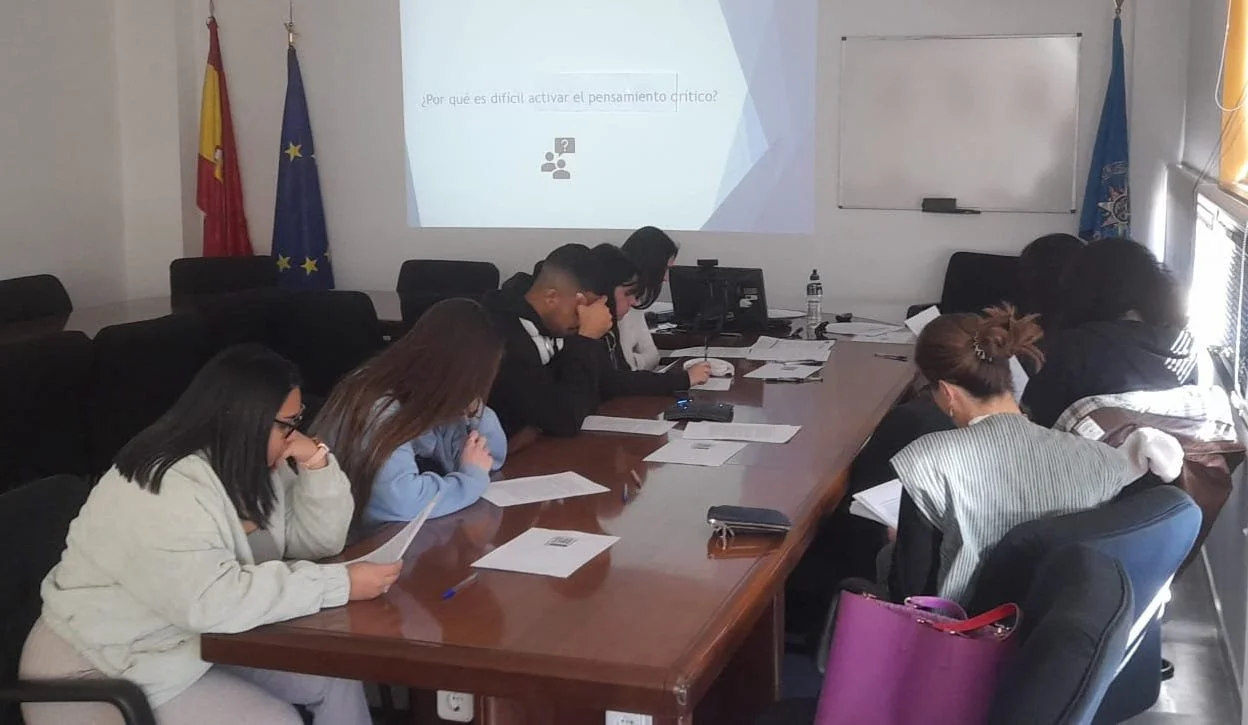
From a more applied standpoint, we are developing interventions aimed at fostering critical thinking in educational settings. Our goal is to encourage analysis and reflection among the general public across a range of contexts, including learning to recognize cognitive biases, identify fake news, distinguish facts from opinions, and evaluate the quality of arguments.
Recent publications:
Villanueva, I., & Orenes, I. (2024). Assessing the impact of short critical thinking training sessions: active vs. passive learning. XXIV Congreso Nacional de la Sociedad Española de Psicología Experimental, Almería.
Villanueva, I., & Orenes, I. (2025). Assessing the impact of short critical thinking training sessions: active vs. passive learning. 5th Meeting of the Society for the Advancement of Judgement and Decision-Making Studies, Barcelona.
Our Team

David Beltrán Guerrero
Associate Professor at UNED
David Beltrán Guerrero previously served as a researcher and lecturer at the Universities of Málaga and La Laguna. He is currently affiliated with the Department of Basic Psychology I at UNED, where he is a member of the PEXCOG research group, and also holds an associate fellow position at IUNE, University of La Laguna. His primary research interests focus on the cognitive processes and effects of negation. Personal website. Personal website.
Isabel Orenes Casanova
Associate Professor at UNED
Isabel Orenes Casanova’s research examines the cognitive processes and mental representations that underlie human thinking, with a particular emphasis on eye-tracking techniques. If you would like to learn more about her work, please visit her personal website.

Sara Martin Fuentes
Sara Martin Fuentes holds a BA in Translation and Interpreting from the University of Málaga and an MA in Language Science and Hispanic Linguistics from UNED. She is currently pursuing a PhD focused on the cognitive effects of negation.
PhD Student at UNED
Ivan Villanueva Wheeler
Master’s Student in Research in Psychology at UNED
Ivan Villanueva has a long professional trajectory in language teaching, translation, and third-sector management. He is transitioning toward a research-focused career in cognitive psychology. His intercultural experience and work in demanding environments have shaped his interest in how cognitive processes influence behavior and social interaction. As a collaborator at Realab, he aims to apply his professional background in innovative and effective ways across educational and professional contexts.

Gabriele Zunino
Master’s Student in Research in Psychology at UNED
Following a career in the creative industry, his interest in better understanding the people his work engaged led him to pursue studies in psychology, marking a new professional chapter. Over the past decade, he has worked in education, consulting, and people management, and has supported professionals through individualized psychological training. Joining Realab has offered him the opportunity to further develop core research skills and contribute to the advancement of cognitive psychology.
Jimena González Sáez
PhD Student at UNED
Jimena González Sáez holds a Bachelor’s degree in Applied Languages and Translation and Interpreting from the European University of the Atlantic, and an Erasmus Mundus Master’s degree in Clinical Linguistics awarded by a consortium of universities in the Netherlands, Belgium, and Finland. Her current research focuses on the processing of negative sentences using eye-tracking methods.
Alejandro Alonso Becerro De Bengoa
PhD Student at UNED
Alejandro Alonso Becerro De Bengoa holds a Bachelor's degree in Psychology from UNED and a Master's degree in General Health Psychology from Universidad Europea. His professional experience includes personnel selection, aeronautical clinical assessment, and clinical psychology practice, providing therapy in Spanish, English, and Italian. He is also active in science communication on social media, where he shares content on psychoneurolinguistics, languages, and cultures (@Alexbengoaa). He is currently completing a PhD in psychology focused on the cognitive processes and effects of negation.
UNED Dialogues
One hundred million. That is the remarkable number of users ChatGPT reached just two months after its launch. Its appeal lies in being the most unusual and capable reader-writer ever created. It translates and corrects texts instantly, generates summaries and written content on a wide range of topics, produces code on demand, engages in seemingly “creative” conversations, and both entertains and unsettles us with its mistakes, response biases, and confabulations. Its linguistic abilities are striking, and it is therefore unsurprising that it has become the driving force behind a new spring of artificial intelligence, renewing both interest in and concern about the creation of intelligent machines. This time, however, the spring is led by algorithms that, like GPT, learn to perform efficiently tasks long regarded as exclusive to the human mind. At the pinnacle of this exclusivity are those related to natural language, without which symbolic thought, social relationships, and culture would not exist as we know them.
UNED Dialogues on Machines and Minds is a series of interdisciplinary encounters promoted by the UNED Faculty of Psychology and the Reasoning and Language Lab (Realab). It was created with the aim of bringing together experts in cognitive psychology, linguistics, and artificial intelligence to analyze one of the greatest challenges of our time: the convergence between human thought and algorithmic processes.
With three established editions, the series has positioned itself as a benchmark for the research community and the public interested in the technological vanguard.
3rd edition of the UNED Dialogues
November 19, 2025
Cognitive and Social Robots: From Self-Awareness to In-Home Assistance.
Pablo Lanillos, CSIC; Felix de la Paz López, UNED; Francisco Martín, Rey Juan Carlos University.
Robots are systems capable of interacting with their environment in complex ways. It is to be expected that the presence of robots will become even more widespread, and that we will soon encounter them in everyday settings, assuming roles that require adaptation, precision, and a certain degree of cognitive autonomy. This natural evolution of robotics raises fundamental questions about how we design and understand the “mental” processes of these machines. Among other areas of interest, cognitive robotics aims to study how robots can be endowed with mechanisms that allow them to perceive, reason, and learn under conditions of uncertainty (that is, in a changing environment such as our own). This involves executing instructions and constructing internal representations of the environment, adjusting behavior in a flexible manner.
In this third edition, the focus was placed on the cognitive and social dimensions of robotics, as well as on several particularly interesting advances and application domains. Three speakers analyzed how robots process sensory information, plan their behavior, and cope with everyday situations. Naturally, the current limitations of these approaches were also discussed.
2nd edition of the UNED Dialogues
November 6, 2024
Cognitive Biases and Decision-Making
Alejandro Martínez Mingo, UNED; Gorka Navarrete García, Adolfo Ibáñez University (Chile); José Luis Aznarte Mellado, UNED.
This second edition had the purpose of providing a broad overview of how both humans and the new and striking systems known as Large Language Models systematically erred when processing information and making decisions. Throughout the event, we explored the similarities and differences between human and artificial cognition, as well as the challenges that remained unresolved. As tools such as ChatGPT are increasingly used to address everyday questions and problems, it becomes essential to understand the algorithms that drive their decisions and the kinds of errors they may produce. The talks covered cognitive biases in humans and basic approaches to modeling them, decision-making in medical contexts and common diagnostic errors, and the limitations of applying AI in educational settings. This lecture series provided a forum for discussing the benefits and drawbacks of both human and artificial intelligence.
1st edition of the UNED Dialogues
October 25 – November 8, 2023
Lenguaje Natural y Algoritmos en la era de chat GPT
Enrique J. Carmona, UNED; Antonio Benítez-Burraco, University of Seville; Jon Andoni Duñabeitia, Nebrija University; Juan Martínez Romo, UNED; Guillermo Jorge-Botana, UCM; Jose Antonio Hinojosa, UCM
The purpose of that first edition was to offer a broad overview of how both humans and the new and striking systems known as Large Language Models acquired and used natural language. Over two days of lectures and discussion, the event addressed the biological origins and functions of language; similarities and differences between machine learning and human learning; the role of culture and knowledge in full language acquisition; the power of words to shape and integrate emotional experience; recent advances in the automatic detection of emotions in text; and, more generally, the need to incorporate psychological insights into the development of new artificial intelligences.

Recordings available at UNED Channel
Organizing Committee:
David Beltrán, José Ángel Martínez-Huertas, Sara Martín and Isabel Orenes.

Knowledge Generation Project:
PID2021-128267NB-I00

Office of the Vice-President for Research, Knowledge Transfer, and Science Communication